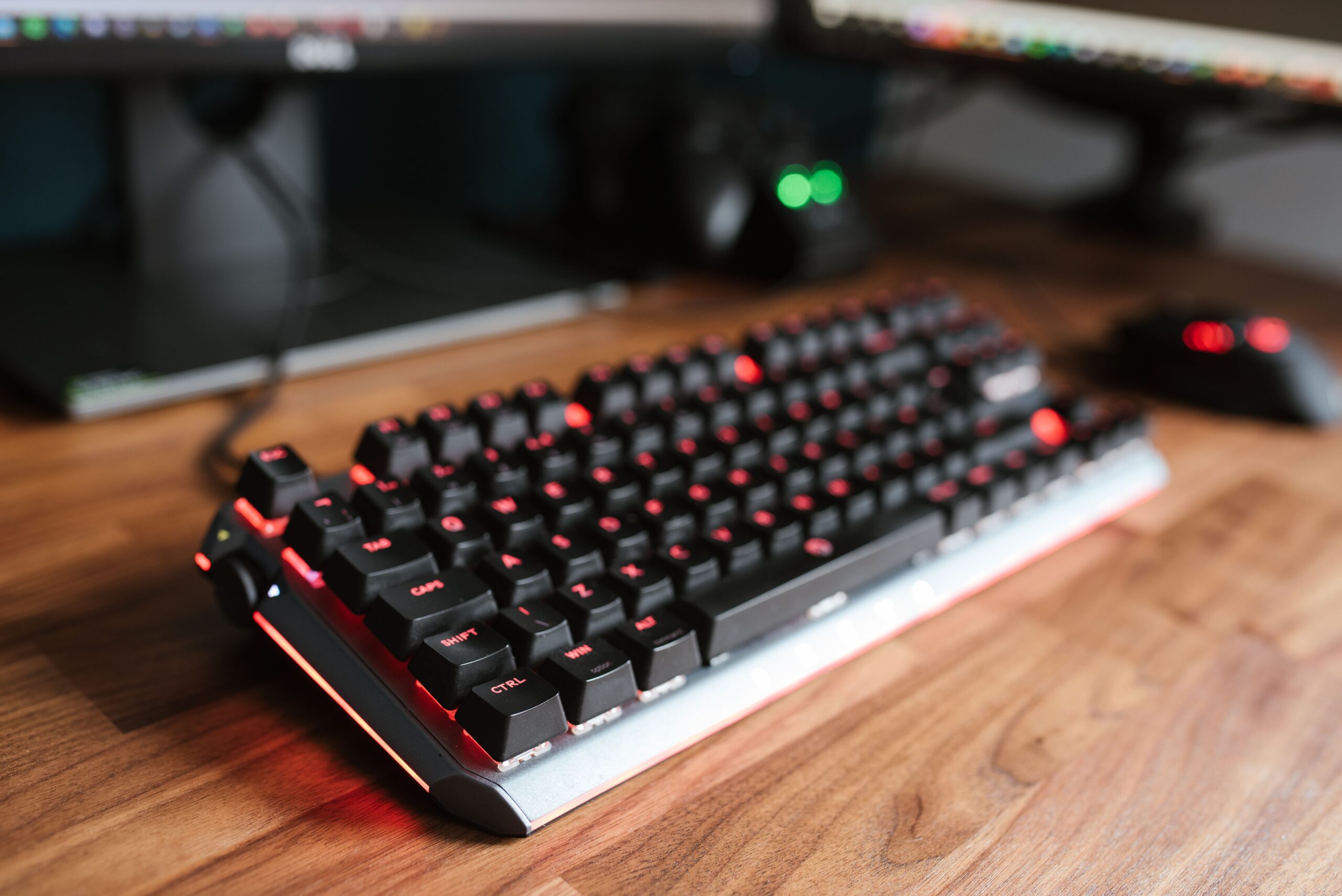
Open-world games ask a lot from a keyboard. You’re sprinting, sneaking, swapping weapons, driving, and mashing dialogue prompts, often within the same five minutes. A keyboard that’s fine for typing can start to feel sluggish or mushy once you’re actually gaming on it for hours.
Short answer: mechanical switches beat membrane for anything action-heavy, full stop. Beyond that, it comes down to whether you want linear switches (smooth, fast, quieter) or tactile ones (a bump you can feel, better for precision but slightly slower).
What actually matters here
Switch type is the biggest decision. Linear switches (like Red switches) move in a single smooth motion with no bump, which is why a lot of action gamers prefer them: less resistance means faster repeated inputs. Tactile switches (like Brown switches) give you physical feedback at the actuation point, which some players find helps with precision, at a small cost to raw speed.
N-key rollover matters more than people realize for open-world games specifically, since you’re often holding multiple keys at once (sprint plus a direction plus an ability). Cheaper keyboards without proper rollover can drop inputs exactly in the moments that matter most.
Build quality for long sessions isn’t just about switches. A keyboard that flexes or has mushy stabilizers on the larger keys (space bar, shift) gets annoying fast once you notice it, and you will notice it eventually if it’s bad.
Our picks
Best overall: a full-size mechanical keyboard with linear switches and proper N-key rollover covers the bases for almost anyone playing action-heavy open-world games.
Best for precision: tactile switches if you play a lot of stealth or aim-heavy sections and want that physical confirmation on each press.
Best budget option: entry-level mechanical keyboards have gotten genuinely good, and you don’t need per-key RGB or a fancy aluminum frame to get real mechanical switches and rollover at a low price.
Bottom line
Don’t overthink this one. Mechanical over membrane is the real upgrade; the switch-type choice after that comes down to personal feel more than any objective “better” option.